There is something that has always bothered me about the way society views female fans: the difficulty people seem to have accepting that admiration can simply be admiration.
It may seem like a small thing, but it isn’t. The moment a woman shows enthusiasm for a singer, actor, or any other artist, the conversation changes. Suddenly, she is no longer praising their work, following their career, or connecting with their art. She “wants to sleep with him.” She is “disrespecting her boyfriend.” She is “fantasizing” about that artist. The art disappears from the conversation, and all that remains is sexualization.
What strikes me isn’t just the number of comments like these, but how natural this way of thinking seems to so many people.
Because the same logic is rarely applied to men.
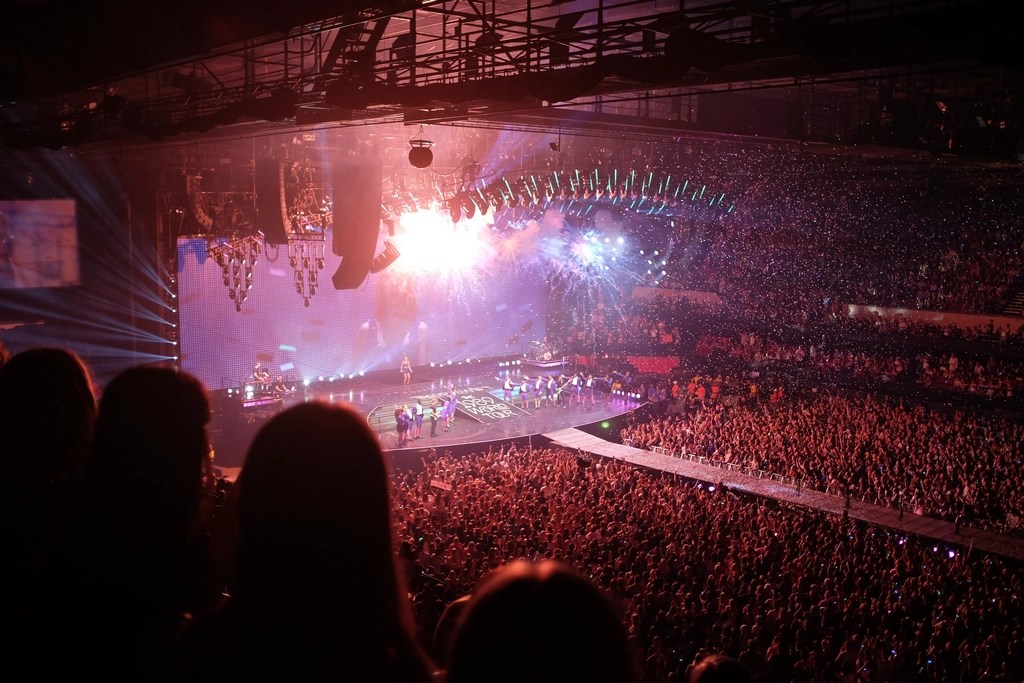
Men follow bands for decades, collect football jerseys, travel to watch their favorite teams play, and fill stadiums and events to see athletes, musicians, and content creators they admire. No one automatically assumes there must be sexual attraction involved. Male admiration is usually understood as respect, inspiration, or simply passion for something they love.
With women, the logic seems to be different. There is a constant need to reduce their interests to romantic or sexual feelings, as if women were incapable of admiring a man without wanting him.
And this doesn’t happen only in music. It happens with books written by men, films directed by men, sports, content creators, and virtually any other space where women openly express enthusiasm for a male figure. In many cases, the conversation stops being about the quality of the work and becomes a judgment of female behavior instead.
At its core, this reaction reveals a much older difficulty society has with recognizing women as people with interests of their own. Their tastes are still treated with suspicion, as though they need to be explained by some underlying romantic or sexual interest.
It is a subtle way of discrediting women. After all, when female admiration is constantly interpreted as desire, it stops being taken seriously. The artist’s talent becomes secondary. The connection built through art loses its significance. Everything is reduced to a narrative that, once again, places women under a sexualizing gaze.
And perhaps that is exactly the problem.
Not all admiration is infatuation. Not all enthusiasm is attraction. Not every fandom is a romantic fantasy.
Sometimes, a woman is simply a fan.
And the fact that this is still so difficult for some people to understand says far more about the way we view women than it does about the way women choose to appreciate art.


Leave a Reply